Google Glass – what would you do with it?

Google Glass – what would you do with it?glass8
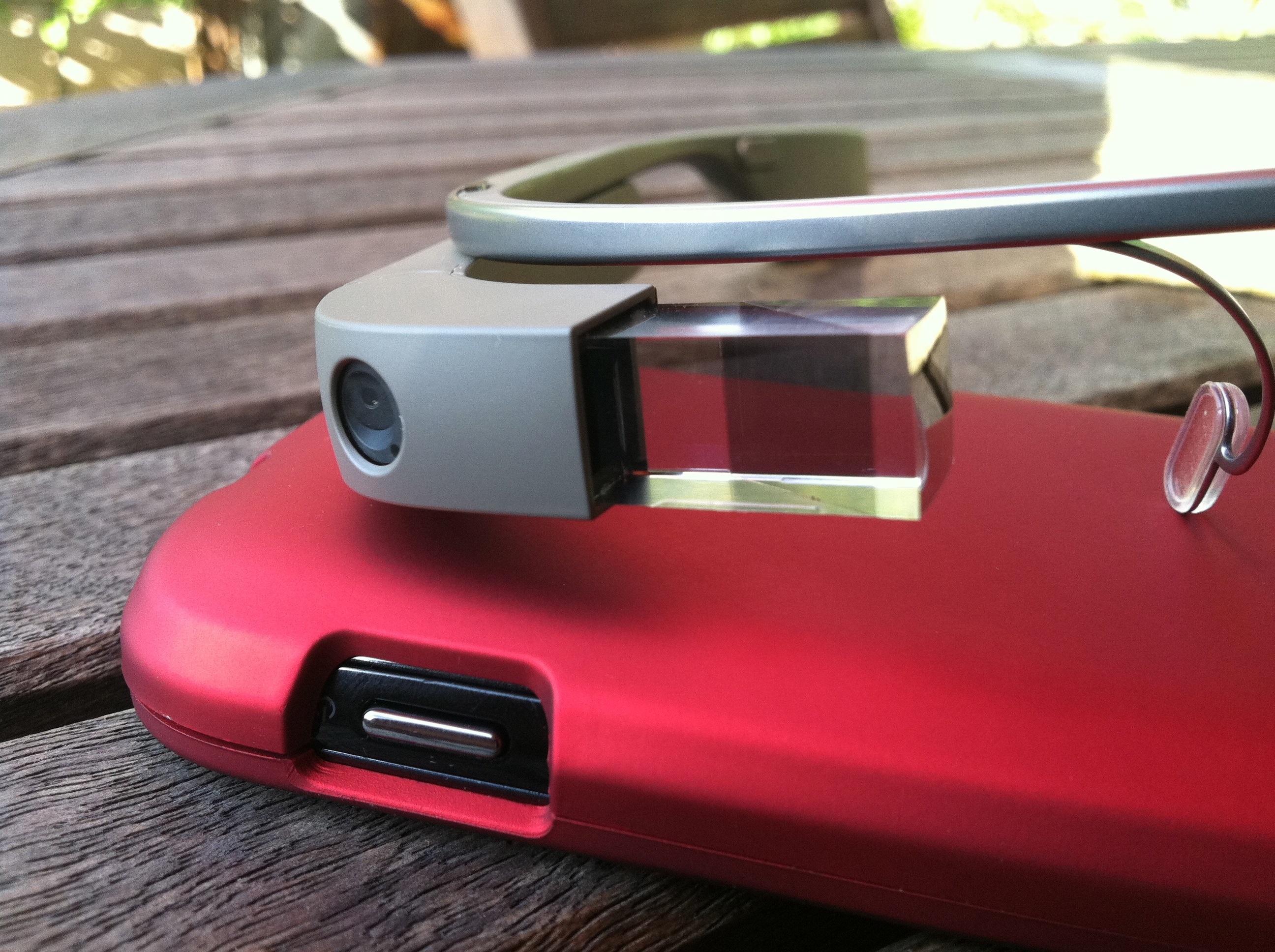
Does that seem like an odd question? You know Google as the big Kahuna, the most used web search engine in the world. In fact you probably use Google Search and web tools every day – I do.

So what’s the deal with Google Glass? Think Trinity from the Matrix movies. Remember when they download directions for flying a helicopter directly to her brain – that’s Google Glass but with real time, real world application. Well maybe that’s a little embellished but you get the picture. Google Glass lets you access and share what you need to know, whenever and wherever you need it – without your computer, tablet or smartphone. Google Glass is wearable technology that literally puts information before your eyes.

This past week Google launched its Glass campaign, providing more detail about the actual glasses. Watch the video, you’ll quickly understand the concept and start thinking of ways to use the technology. They’ve also launched a contest enabling people like you and I to put the technology to work in real time, real life situations. The catch is you have to earn access to Google Glass and buy your own pair at $1,500 a pop.

Personally I’m all about real time, I want to have the collective knowledge of the world at my fingertips. I want to share information that I have with other people, when they most need it. I’d like to see communication and knowledge sharing be as simply and easy as well… a Google web search. So absolutely I’d submit a 50 word #ifihadglass entry and I’d pay for the glasses.

Watching the Google video was a good place to start, it quickly got me thinking about different applications for the Glass. Could it help the world be greener? I think so. We recently put in a large organic vegetable garden, how cool would it be to get advice from more experienced growers. To share what I’ve learned with other people – anywhere in the world – who want to be backyard growers. Could we start a Google Green Glass revolution, could we bring together a global group of backyard farmers that spurs us to eat more veggies and use fewer pesticides? I believe we could.


Those involved in animal rescue understand the need to rapidly share information and mobilize the rescue community – the life of an animal depends on it. Imagine sharing information about a shelter dog across your vast network of volunteers while you’re giving that dog some much needed love and attention. You could have your rescue army mobilized before you even leave the shelter. Google Glass photo and video capturing capabilities used with on-the-spot sharing would bring greater speed and broader reach to the global rescue network and just think what that means for the dogs, cats and other animals sitting on the bare cement floor in a local shelter.

Healthcare just might be the ultimate use for Google Glass. Being a health care professional I can see endless possibilities and uses. A group of us from the Google Healthcare Talk Community have been brainstorming how to put Google Glass to use in the health setting. Imagine being diagnosed with a serious illness. Simply understanding everything involved with your care and treatment can be overwhelming, now go to a medical facility that covers 5 city blocks and figure out where to go for your lab work, x-rays and doctor visit. Could Google Glass help a patient navigate the hospital? We think it could.

Could Google Glass benefit the health team providing care in a Patient-Centered Medical Home (PCMH)? It’s hard to think of a way Google Glass wouldn’t be a benefit.  Coordinated care is a major focus at a PCMH, accessing and sharing information across specialties and between health settings is critical to maximizing patient outcomes. Google Glass facilitates this process.

You have to love the enthusiasm of Kathi Browne, founder of the Healthcare Talk Community, she asks you to imagine how a physician might use Google Glass…

  • In place of a stethoscope, more sanitary and never cold
  • As a means to communicate securely with other physicians
  • To magnify moles or injuries
  • Administer visual tests to several patients at one time
  • Screen patients for glaucoma
  • Access information… CPT codes, drug information, research articles
  • Record office visits via hands-free dictation
  • As a tool in bio-feedback therapy
  • Make a telemedicine consult possible

The list could be endless… imagine using Google Glass as a tool for real time information sharing during a global health crisis or as a means of capturing detailed audio and visual documentation during a procedure. I’m sure you get the picture; Google Glass and healthcare are natural partners.

Watch for our #ifihadglass submission. If we’re fortunate enough to be selected you’ll see our Google+ Hangouts used to brainstorm real world healthcare applications for Google Glass. The goal being to identify a short list of immediate uses for the technology, put the Glass to work in these health settings and document along the way. Creating a blog and video resource for everyone involved in health care and starting point for the use of Google Glass in the health setting.

Do you have a healthcare related use for Google Glass? Or perhaps you think it shouldn’t be used in healthcare? We’re interested in your feedback, tell us what you think.

Update March 27, 2013 – Super excited, just got the invite to join #glassexplorers!
Screen Shot 2013-03-27 at 4.20.37 PM


This post originally appeared on CROWDTalk.

5 Market Research Trends to Watch in 2013

It’s mid January and by now everyone has tossed the left over Christmas candy, deleted the out of office messages and updated their calendars for 2013. Last week as I was relocating candy kisses from my desk drawer to ‘file 13’ I started thinking about the new year, what it holds for InCrowd and the market research industry at large.

Here are my predictions on 5 market research trends gaining momentum in 2013:

1. There will be a concerted move toward shorter, faster micro surveys

I realize that as an industry we have a long history of talking about decreasing response rates, respondent fatigue and the need for shorter surveys; however this time I think we’re ready for the rubber to hit the road. People are increasingly mobile, stretched for time and inundated with information resulting in both limited availability and shortened attention spans. To accommodate busy lifestyles market research must adapt and that means shorter, faster micro surveys. If we as an industry want to ensure continued access to relevant market feedback we must be ready when, where and how the respondent is ready to engage. I think this sums it up nicely… Micro-surveys: a faster way to learn about your users

2. Sample will be more representative

This is not because we micro manage and over analyze our sample, but because we do a better job engaging with people who actually matter to and have an interest in our brand. I would rather have meaningful answers from 100 respondents than 400 responses from people that don’t really care about my brand and just want the gift card for participating. Some have said bias is good and in this case I agree. To put it in perspective… Here’s How To Create A Never-Ending Focus Group And Keep Your Customers Happy.

3. Mobile is its own method: you can’t force fit mobile

While poking around Zite  on my iPad I read an article telling me that in 2013 mobile phones will overtake PCs as the dominant web access device worldwide. Not a surprise in the least, mobility reigns supreme. As does the ability to stay connected anytime, anyplace. This begs the question… how can I best reach these people? The answer is easy, via mobile market research. The difficult part is in conducting that mobile market research. Simply taking a survey instrument, giving it a few tweaks, deleting a couple of question and pushing it to a mobile device is NOT conducing mobile market research. Mobile is a method of its own and needs to be treated as such from start to finish. As 2013 progresses I expect to see increased focus and discussion around the overall mobile research process, you can read more at… You Can’t Force Fit Mobile Into the Current Market Research Process.

4. Data will be more visual

People are tired of charts and graphs; they want to interact with their data, gain deeper insights and understand relationships between data sets. One-dimensional information is limited, connecting multiple data sets tells a story. Think infographic, think SecondPrism and if you really want something to think about check out… My Data Visualization Wish List.

5. There will be a new openness in the market research industry

As an industry we can no longer afford to ‘do it the way we’ve always done it’ or rely solely on the ‘traditional’ when conducting market research. Success hinges on industry openness to innovation and technology, a willingness to engage in social listening and the use of multiple channels to access data. Our respondents and their increasingly tech-focused mobile lifestyles are driving the need for openness and – yes I’ll say the word – change. You’ll find some food for thought relative to industry openness in… Revisiting 8 Things I Would Do if I Were a Market Research Company.

Have you noticed a common theme to my 5 trends? I see a more interactive, respondent-centric market research environment that fully utilizes new technologies to gain market insights.

I’d like to know your thoughts… Do you agree with my trends? Have some of your own? What do you see for the market research industry in 2013?

Oncologists share the most exciting ESMO 2012 developments

Today marked the close of the 37th European Society of Medical Oncology (ESMO) Congress in Vienna, Austria. More than 17,000 attendees from over 120 countries came together to discuss new cancer treatments, explore new technologies and share experiences. This global event was defined as a ‘practice changing’ Congress, putting us on the cusp of major change in the treatment of cancer.

Prior to the start of the Congress, Martine Piccart, ESMO 2012 Congress President was quoted as saying, “The oncology field is going to explode within the next five years and in ten years from now oncology will be drastically different from what it is today: what we are going to see at ESMO 2012 in Vienna will give a broad overview of how new technologies can improve the tailoring of cancer therapies for the benefit of our patients.” With this in mind, InCrowd asked 100 oncologists that attended ESMO to tell us what they felt was the most exciting development to come from this year’s Congress.

The top five developments defined by ESMO attendees include:

  • Personalized medicine and targeted therapies
  • Genetic profiling, gene mapping for targeting treatment
  • HER2-directed therapy for breast cancer
  • New developments in the treatment of melanoma
  • Immunotherapy in cancer treatment

n = 100 oncologists attending ESMO
Time to field micro survey during ESMO: 32 minutes

Physician comments:

  • Personalized medicine — hope and complexities that will engender a need for better informatics infrastructure and physician (and other) education.

  • I am personally less optimistic that Martine Piccart. The more we learn the more complex cancer biology becomes. There are some success stories but a lot are still left behind. Due to complex biology, lack of targets and increasingly unaffordable drugs.

  • Genetic profiling of lung cancer, breast cancer, new pathway inhibitors, more immune directed therapies.

  • The new targeted treatments and genetic / molecular markers to tailor treatments to specific patients.

  • The data that Genentech’s TDM-1 agent has broad efficacy particularly in breast cancer is a major development as this is a completely novel type of agent. The phase III COMPARZ data in RCC supports that Votrient may be better tolerated than Sutent. The phase III data from INTORACT in RCC continues to support the notion that sequential therapy maybe more effective than combination therapy thus far in RCC.

  • The development of targeted therapy and personalized management plan for individual cancer patients.

  • The validation of 12-months of adjuvant Herceptin for Her2+ breast CA.

  • For melanoma, 2-drug combination is better than 1 drug including BRAF inhibitor and MEK inhibitor. TDM-1 safe with improved PFS and OS in Her-2/NEU(+) mBC.

  • Targeted BRAF and MEK therapy for melanoma; 1 yr duration of adjuvant Herceptin.

  • This conference has clearly shown the rising interest not only in the research of cancer therapy and the introduction of new markers for early Cancer detection such as histone modifications – but has also in cooperated patients needs in the view of rising health care questions.

  • Agree with Martine Piccart, that oncology practice will have dramatic changes, especially it will be more individualized treatment tailored specifically to the tumor biology very exciting.

  • Continued emergence of “smart” chemo-therapies, tailored to the proteins and factors is the most important aspect of oncology and its future.


  • We are treating cancer so differently now than several years ago, and it is only going to get more specific.